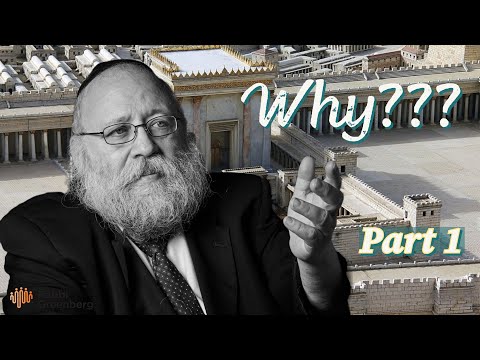
Sacrifice or Transformation?
About this class
Rabbi Greenberg explains why the Hebrew word korban, used throughout the opening of Vayikra, does not really mean "sacrifice." Its root, karov, means near: bringing a korban drew the person, and whatever he brought, closer to God. A sacrifice means giving up one thing for a greater benefit, like a sacrifice fly in baseball, and in that sense everything we do, from going to work to eating an apple, would be a sacrifice.
Rather, he says, what we call sacrifice is really conversion: food eaten is transformed into energy for the person. With a korban, the animal was raised to the human level, and the person in turn made himself godly. The Temple offerings combined mineral (salt), vegetation (flour, oil and wine), animal, and a human being, the kohen, so that all four elements of the world were elevated and brought closer to God. Even without the Temple, as we prepare for the Third Temple and Mashiach, this elevation fulfills the purpose of making the world a dwelling place for God.
- The word korban comes from the root karov, meaning close or near, not from the idea of giving something up.
- In the sense of sacrifice as giving up one thing for another, everything a person does would count as a sacrifice.
- What we call sacrifice is really a process of conversion, as when an apple is transformed into energy for the one who eats it.
- The Temple offerings included mineral, vegetation, animal and a kohen, elevating all four elements of the world.
- Bringing the world closer to God in this way fulfills the purpose of creation, that the world become a dwelling place for God.
Everything in this world was created with a purpose. It is the duty of every human to engage with the material world in a purposeful way. With this mentality, we will see that within our mundane activities lies deep spiritual potential.